Is Your HVAC Making You Sick? Air Quality & Carbon Monoxide Risks
Is Your HVAC Making You Sick? Air Quality & Carbon Monoxide Risks
Yes, if you are wondering, "can my hvac be making me sick," the answer is absolutely. A neglected heating and cooling system frequently circulates biological contaminants, volatile organic compounds, and dangerous combustion gases directly into your living spaces. According to the EPA, indoor air pollution levels routinely measure two to five times higher than outdoor concentrations. Poor indoor air quality stemming from dirty ductwork or failing equipment directly causes respiratory distress, chronic fatigue, and severe allergic reactions.
The way your central air system operates means that all the air in your home passes through the return vents, moves across the conditioning coils, and blows back out through the supply vents. This cycle happens multiple times per hour. If there is a source of contamination anywhere within this closed loop, the blower motor acts as a distribution mechanism, spreading microscopic particles into every single room. A family of four typically generates up to 40 pounds of dust annually within a standard 1,500 square foot home. When this debris accumulates on moist evaporator coils, it creates an ideal breeding ground for harmful bacteria and fungal growth.
Can HVAC Cause Carbon Monoxide Poisoning?
Homeowners frequently ask, can hvac cause carbon monoxide leaks and subsequent poisoning? When you have a fuel-burning appliance like a natural gas furnace, a propane heater, or an oil boiler, the risk is very real and requires strict attention. Carbon monoxide is an odorless, colorless gas produced naturally during the combustion process. Under normal and safe operating conditions, these dangerous exhaust gases vent safely to the outside of your home through a dedicated flue pipe.
However, if the metal heat exchanger inside your furnace develops a hairline crack due to age, poor maintenance, or continuous overheating, the toxic combustion gases can leak directly into the supply air stream. Once in the supply air, the blower fan pushes the carbon monoxide into your living spaces. The EPA states that average carbon monoxide levels in homes without gas stoves vary from 0.5 to 5 parts per million. When a furnace malfunctions, these levels can quickly spike above 70 parts per million, which induces severe headaches, dizziness, disorientation, and nausea. Prolonged exposure at higher concentrations becomes fatal.
To protect your household, you must install reliable carbon monoxide detectors on every level of your home, specifically within 10 feet of all sleeping areas. You should also ensure that a certified technician performs a comprehensive combustion analysis during your annual heating tune-up to verify that your heat exchanger is completely intact and operating with zero leakage.
Identifying Biological Contaminants and Mold in Your Ducts
Beyond the severe threat of carbon monoxide, biological growth within your cooling system represents a major cause of health complaints. Air conditioners remove moisture from the indoor air to keep you comfortable. This condensation drips off the cold evaporator coils and into a drain pan. If the drain line clogs or the coils become coated in a thick layer of household dust, the trapped moisture creates a stagnant environment perfect for mold and mildew proliferation.
When mold spores colonize inside the air handler or the adjoining ductwork, your system essentially becomes an active mold distribution network. Every time the thermostat triggers the cooling cycle, thousands of microscopic spores blast through the supply registers. Individuals with asthma or compromised immune systems will experience immediate symptoms, including persistent coughing, watery eyes, throat irritation, and shortness of breath. The EPA categorizes biological pollutants as a primary factor in sick building syndrome.
You can often identify a biological contamination issue by paying attention to odors. If you notice a distinct musty or dirty sock smell when the air conditioning turns on, you likely have mold growing on the internal components. Addressing this requires professional cleaning of the coils and potentially installing ultraviolet germicidal lamps inside the ductwork to neutralize organic threats before they can reproduce.
The Role of Proper Filtration in Preventing Illness
Your air filter serves as the first line of defense against airborne irritants that trigger sickness. Unfortunately, many homeowners rely on cheap fiberglass filters that only capture the largest dust bunnies and do absolutely nothing to stop microscopic particles like pet dander, pollen, and bacteria. When these tiny irritants bypass the filter, they circulate through the air you breathe and settle into your respiratory system.
Upgrading your filtration strategy dramatically improves indoor air quality. Experts recommend using pleated filters with a Minimum Efficiency Reporting Value rating between MERV 11 and MERV 13 for optimal residential health benefits. A MERV 13 filter successfully captures up to 90 percent of particles as small as 1.0 micron, which includes fine dust, auto emissions, and droplet nuclei associated with sneezing. You must replace these filters every 30 to 90 days. A clogged filter restricts airflow, forcing your equipment to work harder while simultaneously allowing bypassed pollutants to re-enter your breathing space.
Indoor Air Quality Comparison Table
| Pollutant Type | Common Source in HVAC | Health Symptoms | Prevention Strategy |
|---|---|---|---|
| Carbon Monoxide | Cracked furnace heat exchanger | Nausea, dizziness, fatal poisoning | Annual combustion testing and CO detectors |
| Mold & Mildew | Clogged condensate drains, dirty coils | Asthma attacks, throat irritation | UV lights and coil cleaning |
| Particulate Matter | Bypassed low-quality air filters | Sneezing, allergic rhinitis, fatigue | Upgrade to MERV 11 to 13 pleated filters |
| Volatile Organic Compounds | Poor ventilation trapping indoor chemicals | Headaches, skin rashes, eye irritation | Install whole-home mechanical ventilation |
Actionable Steps to Improve Indoor Air Quality
Taking proactive steps ensures your heating and cooling equipment supports your health rather than degrading it. First, establish a strict schedule for filter replacements. Write the date on the edge of the new filter so you never lose track of when you installed it. Second, monitor your indoor humidity levels closely. According to ENERGY STAR guidelines, you should keep indoor relative humidity strictly between 30 percent and 50 percent. If the humidity exceeds 60 percent, mold growth accelerates rapidly. You might need a whole-home dehumidifier integrated into your ductwork to maintain these optimal levels during the humid summer months.
Third, ensure your ductwork remains tightly sealed. Leaky ducts located in an unconditioned attic or crawlspace will suck in contaminated air, fiberglass insulation particles, and pest droppings, distributing them directly into your bedrooms and living room. Having a professional seal your duct joints with mastic sealant prevents this dangerous cross-contamination.
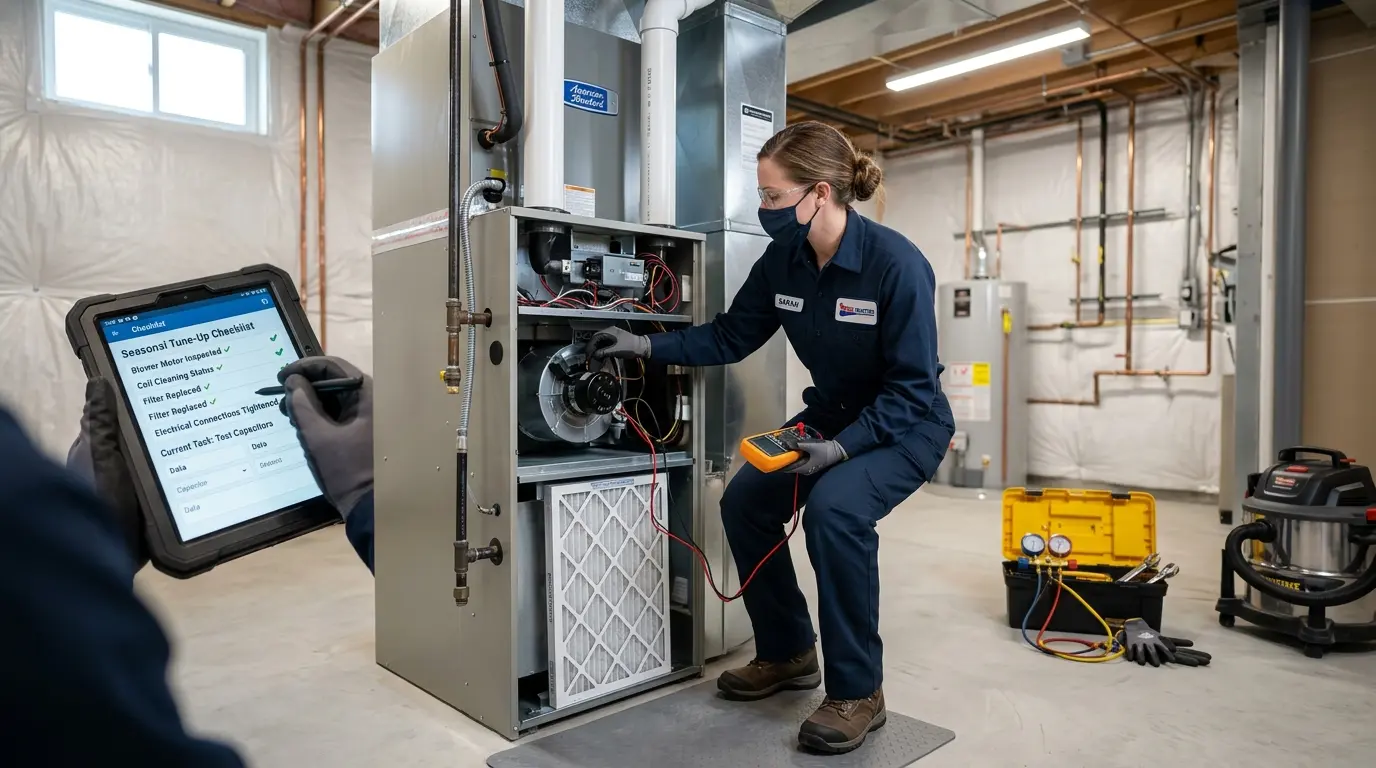
Finally, you must invest in preventive care. Regular inspections catch minor issues before they escalate into major health hazards. We highly recommend reviewing our comprehensive HVAC maintenance guide to understand exactly what a professional tune-up should include. A thorough check involves cleaning the blower assembly, flushing the condensate line, and testing all safety limit switches to guarantee the equipment runs safely and efficiently year round.
When to Call a Professional for HVAC and Health Concerns
You should contact a certified HVAC professional immediately if you experience physical symptoms that mysteriously vanish when you leave the house but return shortly after you step back inside. This specific pattern strongly indicates an indoor air quality issue directly tied to your home environment. Furthermore, if you visually spot black growth around your supply vents, smell burning plastic, or notice a rotten egg odor near your furnace, shut off the system completely and call for emergency service.
Never ignore a sounding carbon monoxide alarm. If the detector triggers, evacuate the premises immediately, call emergency services, and do not re-enter until the fire department clears the home. Once the immediate danger passes, a licensed HVAC contractor must inspect the furnace to locate the source of the leak and perform the necessary repairs or complete system replacement to restore safety to your home.
Try Our Air Change Rate (ACH) Calculator
Calculate ventilation air exchange rates for healthy indoor air.
Open Air Change Rate (ACH) Calculator →