HVAC Maintenance Guide: What's Included & How Often
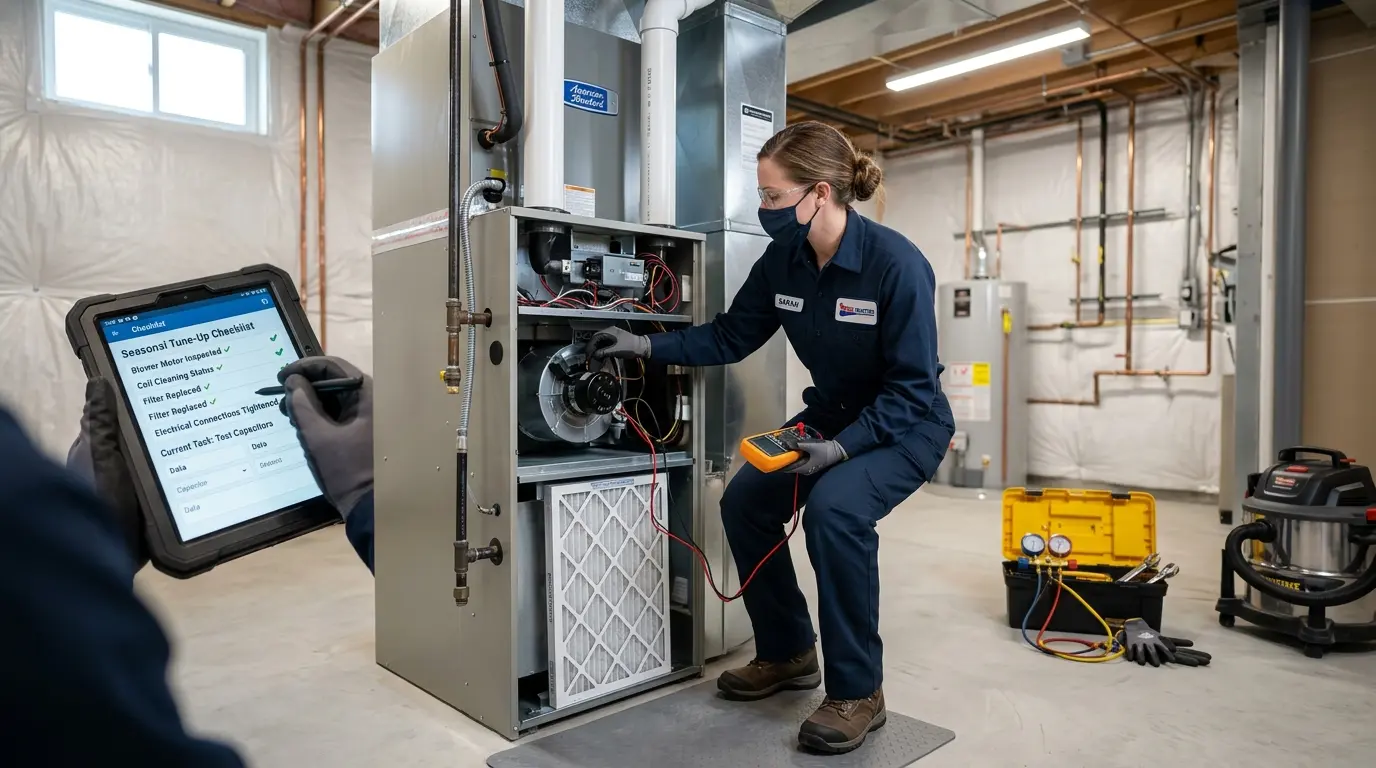
If you are wondering exactly what does hvac maintenance include, the answer involves a comprehensive inspection, cleaning, and tuning of your heating and cooling equipment by a certified professional. A standard service visit covers testing electrical connections, measuring refrigerant levels, calibrating the thermostat, cleaning condenser and evaporator coils, lubricating moving parts, and inspecting the condensate drain. This routine care ensures your system operates at peak efficiency, prevents unexpected breakdowns, and extends the lifespan of your unit.
Understanding the full scope of routine service helps homeowners make informed decisions about property management. The Department of Energy and the Environmental Protection Agency both stress that neglected systems degrade in performance over time. Dirt and neglect are the top causes of heating and cooling system inefficiency and failure. To avoid unnecessary costs and ensure a comfortable indoor environment, property owners must understand the intricacies of professional service visits and the tasks they entail.
What Is Done During HVAC Maintenance: A Comprehensive Breakdown
Homeowners frequently ask what is done during hvac maintenance to justify the cost of hiring a professional. A thorough service appointment is far more than a simple visual inspection. It is a rigorous diagnostic and corrective process designed to restore the equipment to factory specifications. Technicians typically follow a detailed checklist provided by the Air Conditioning Contractors of America to ensure no component is overlooked.
The first step involves a complete electrical assessment. Technicians inspect the contactors, relays, and capacitors for signs of pitting or wear. A failing capacitor can cause the compressor to draw excessive amperage, leading to premature failure. The technician will measure voltage and amperage on the compressor and blower motor. If the blower motor is drawing 5.5 amps but is rated for 4.0 amps, it indicates a restriction in airflow or a failing bearing, which the technician will address.
Next, the focus shifts to the mechanical components. All moving parts, such as the blower motor bearings and fan blades, require proper lubrication to minimize friction. Friction increases electrical consumption and generates excess heat, which degrades system components. The technician will also inspect the blower assembly for dirt accumulation. A blower wheel covered in a mere 1/8 inch of dust can reduce airflow by up to 30 percent, forcing the system to run longer to satisfy the thermostat.
Refrigerant level verification is another critical step. The technician hooks up gauges to measure the superheat and subcooling of the system. An undercharged system by just 10 percent can result in a 20 percent increase in operating costs. Conversely, an overcharged system places dangerous stress on the compressor valves. If the technician detects a low charge, they will perform a leak search using electronic sniffers or ultrasonic detectors to locate the source before adding more refrigerant.
Finally, the technician cleans the evaporator and condenser coils. The outdoor condenser coil is exposed to pollen, grass clippings, and dirt. When this coil becomes restricted, the system loses its ability to reject heat. The technician will apply a specialized chemical cleaner and rinse the coil thoroughly. The indoor evaporator coil is also inspected and cleaned to ensure proper heat absorption and prevent microbial growth in the dark, damp environment of the air handler.
| Component | Maintenance Task | Benefit |
|---|---|---|
| Thermostat | Calibrate and verify communication | Ensures accurate temperature control and avoids short cycling. |
| Electrical Connections | Tighten loose wires and measure voltage | Prevents electrical fires and component failure from voltage drops. |
| Condensate Drain | Flush with algicide or bleach solution | Prevents water damage and high humidity levels indoors. |
| Refrigerant Charge | Measure operating pressures and temperatures | Optimizes cooling capacity and protects the compressor. |
| Heat Exchanger | Inspect for cracks using a combustion analyzer | Prevents carbon monoxide leaks into the living space. |
What Is An HVAC Tune Up?
People often use the terms maintenance and tune up interchangeably, but what is an hvac tune up exactly? A tune up is a proactive service call focused specifically on optimizing performance and restoring lost efficiency. While basic maintenance might just involve changing the filter and checking for obvious problems, a tune up goes deeper into the performance metrics of the equipment.
During a tune up, the technician recalibrates the entire system. This includes adjusting the blower speed to match the ductwork static pressure. If the static pressure is too high, the motor works too hard and consumes excessive electricity. The technician will measure the temperature drop across the evaporator coil. The standard target is an 18 to 22 degree Fahrenheit difference between the return air and the supply air. If the drop is only 12 degrees, the technician must diagnose whether the issue is airflow related, refrigerant related, or a mechanical failure.
Gas furnaces require specific tuning of the burner assembly. The technician will adjust the gas pressure to the manifold to match the manufacturer specifications. Incorrect gas pressure can lead to incomplete combustion, producing excess carbon monoxide and soot. The flame sensor is removed and polished with steel wool or emery cloth to remove oxidation, ensuring the furnace does not shut down prematurely due to a false flame failure reading.
The goal of a tune up is not just to verify the system is running, but to ensure it is running as efficiently as it did the day it was installed. The United States Department of Energy states that a proper tune up can yield up to a 15 percent improvement in energy efficiency. Over a long, hot summer or a freezing winter, that percentage translates into substantial monetary savings on utility bills.
Why HVAC Maintenance Is Important
The reasons why hvac maintenance is important extend far beyond simple comfort. Neglecting your heating and cooling equipment has compounding negative effects on your finances, your health, and the environment. Heating and cooling account for nearly half of the energy used in a typical United States home, making it the largest energy expense for most families.
First and foremost, maintenance preserves the manufacturer warranty. Almost all major equipment manufacturers, such as Trane, Carrier, and Lennox, include clauses in their warranty documentation stating that the warranty is void if the equipment is not maintained by a licensed professional annually. If a compressor fails in year five of a ten year warranty, the homeowner must provide service records to claim the replacement part. Without these records, the homeowner is responsible for the full cost, which often exceeds $1,500.
Safety is another paramount reason. Gas furnaces burn combustible fuel to generate heat. The byproduct of this combustion is carbon monoxide, an odorless and colorless gas that can be fatal. The heat exchanger safely contains this gas and vents it outside. However, metal fatigue from constant heating and cooling can cause microscopic cracks in the heat exchanger. During an annual service visit, a technician uses specialized cameras and combustion analyzers to detect these dangerous cracks before they compromise the safety of the household.
Indoor air quality is directly linked to the cleanliness of the HVAC system. The ductwork and air handler distribute air throughout the home. If the coils are covered in biological growth or the condensate pan is full of standing water and algae, the blower will circulate mold spores and allergens into the living areas. Routine cleaning and the application of antimicrobial treatments during maintenance visits keep the air fresh and reduce allergy symptoms for occupants.
How Often To Service HVAC: Establishing a Schedule
A common question among property owners is how often to service hvac equipment. The consensus among industry experts, including the Department of Energy and ENERGY STAR, is that you should schedule professional service at least twice a year. The ideal approach is to align these visits with the changing seasons to prepare the equipment for periods of heavy workload.
If you are wondering how often hvac maintenance is strictly necessary, the rule of thumb is one visit for the cooling system and one visit for the heating system. The air conditioning unit should be serviced in the spring, typically between March and May, before the extreme summer heat arrives. The heating system, whether it is a gas furnace or a heat pump, requires attention in the fall, between September and November, before freezing temperatures set in.
For individuals asking how often should you get your hvac serviced if they have a heat pump, the answer remains twice a year. Because a heat pump operates year round to provide both heating and cooling, it endures double the wear and tear of a traditional split system. The reversing valve, defrost control board, and outdoor coil all require rigorous inspection every six months to prevent catastrophic failures during extreme weather.
Commercial properties or homes in extreme environments, such as coastal areas with high salt exposure or dusty desert climates, may require quarterly service. High usage and harsh environmental factors accelerate component degradation. In these scenarios, increasing the frequency of maintenance is the only way to combat the accelerated wear.
Are HVAC Maintenance Plans Worth It?
Homeowners are frequently pitched annual service agreements and wonder are hvac maintenance plans worth it. To evaluate the value, one must look at the tangible financial benefits these plans provide compared to paying for one off service calls and unexpected repairs.
A standard maintenance plan generally costs between $150 and $300 per year and includes both the spring and fall visits. If you were to pay for these visits individually at a standard rate of $100 to $150 each, the plan essentially pays for itself. However, the true value lies in the secondary benefits offered by the contractor.
Most reputable HVAC companies offer priority scheduling to plan members. During a heatwave in July, service companies are inundated with emergency calls, and non members may wait up to five days for a technician. Maintenance plan members jump to the front of the line, receiving service within 24 hours. This priority status is invaluable when the indoor temperature reaches 90 degrees Fahrenheit.
Additionally, plans typically include a 10 to 15 percent discount on any required repairs or replacement parts. If a blower motor fails and costs $600 to replace, a 15 percent discount saves $90 right away. Furthermore, maintenance plans often waive overtime fees or emergency dispatch charges for weekend or holiday service calls. When analyzing the cost versus the benefits of priority service, discounted repairs, and extended equipment lifespan, maintenance plans are highly economical for the average homeowner.
Is HVAC Tune Up Worth It?
When reviewing household budgets, many ask is hvac tune up worth it or is hvac tune-up worth it when the system seems to be running fine. The reality is that waiting for a system to break down before calling a professional is the most expensive way to manage property infrastructure. Proactive care is significantly cheaper than reactive repairs.
Consider the energy savings. A system running with a dirty filter, low refrigerant, and unlubricated bearings will consume at least 20 percent more electricity. If the average monthly cooling bill is $150, a 20 percent inefficiency costs an extra $30 per month. Over a five month cooling season, that amounts to $150 in wasted energy, which perfectly offsets the cost of the tune up itself.
More importantly, tune ups catch minor issues before they cascade into major failures. A loose electrical connection generates excess heat and can burn out a contactor. A new contactor costs around $150 installed. If the burnt contactor causes the compressor to short cycle and fail, a new compressor costs upwards of $2,000. Paying a technician $100 to tighten the connection during a tune up saves thousands of dollars in the long run.
If you are debating whether to invest in a tune up, you should also consider the age of your equipment. For systems older than 10 years, regular tune ups are critical to keeping the unit operational until you are ready for a full replacement. You can read more about when to replace your HVAC system to understand the timeline, but proper tuning will help you delay that large capital expense as long as possible.
What Are The 4 Phases Of Planned Maintenance HVAC?
Commercial and high end residential service providers structure their programs around a specific methodology. To understand the depth of this approach, we must explore what are the 4 phases of planned maintenance hvac.
Phase 1 is the Assessment and Inventory phase. During the initial visit, the technician documents every piece of equipment, including model numbers, serial numbers, installation dates, and current condition. They measure baseline performance metrics like static pressure, voltage, and refrigerant pressures. This establishes a benchmark against which future performance is measured.
Phase 2 involves Planning and Scheduling. Based on the assessment, the service provider creates a customized schedule tailored to the specific needs of the equipment. A high efficiency modulating furnace requires different care than a standard single stage unit. The planning phase dictates the frequency of visits, the specific parts that need routine replacement like belts and filters, and the technical skill level required for the tasks.
Phase 3 is Execution. This is the physical work performed on site. Technicians carry out the tasks defined in the planning phase, such as chemical coil cleaning, lubrication, electrical testing, and part replacement. Execution must be documented meticulously. The technician records the new performance metrics after the maintenance is completed to verify that the equipment is functioning within the manufacturer specifications.
Phase 4 is Evaluation and Reporting. The service provider analyzes the data collected during execution to identify trends. If the refrigerant pressure drops slightly every six months, the evaluation phase flags this as a micro leak that requires intervention. The contractor provides a detailed report to the property owner, summarizing the health of the system and projecting future capital expenditures for repairs or replacements. This structured approach guarantees systematic care rather than haphazard checkups.
How To Clean And Maintain HVAC Systems
While hiring a professional is mandatory for the technical aspects of service, property owners play a critical role in the ongoing health of the equipment. Knowing how to clean and maintain hvac systems between professional visits ensures the unit does not suffocate from neglect.
The single most important task a homeowner must perform is replacing the air filter. The filter protects the blower motor and evaporator coil from dust and hair. A clogged filter creates extreme static pressure, forcing the blower to work harder and reducing the volume of conditioned air reaching the living space. Standard 1-inch filters should be replaced every 30 to 60 days, while thicker 4-inch media filters can last up to six months. For detailed instructions, review our comprehensive HVAC filter replacement guide.
Maintaining the outdoor condensing unit requires regular visual inspections. The unit requires a minimum of 24 inches of clearance on all sides to pull in sufficient air. Homeowners must trim bushes, tall grass, and remove leaves or debris that accumulate around the base. You can use a standard garden hose on a gentle spray setting to wash away grass clippings and dirt from the exterior fins. Never use a pressure washer, as the high pressure water will bend the delicate aluminum fins and destroy the coil.
Indoors, keep the supply and return vents unobstructed. Do not place furniture, rugs, or curtains over the vents. Closing vents in unused rooms is a common mistake that disrupts the airflow balance of the entire house, causing the system to short cycle and increasing pressure inside the ductwork. Additionally, homeowners should periodically pour a half cup of white vinegar down the condensate drain line to inhibit the growth of algae and prevent devastating water backups.
By combining diligent homeowner care with biannual professional tune ups, you create an environment where your heating and cooling equipment can thrive. This dual approach maximizes energy efficiency, minimizes repair costs, and ensures your indoor climate remains perfectly controlled regardless of the weather outside. Proper maintenance is not an expense; it is a guaranteed investment in the longevity and performance of your home infrastructure.
Try Our Energy Cost Calculator
See how routine maintenance lowers monthly electricity costs.
Open Energy Cost Calculator →