Can You Finance a New HVAC System? Options Compared
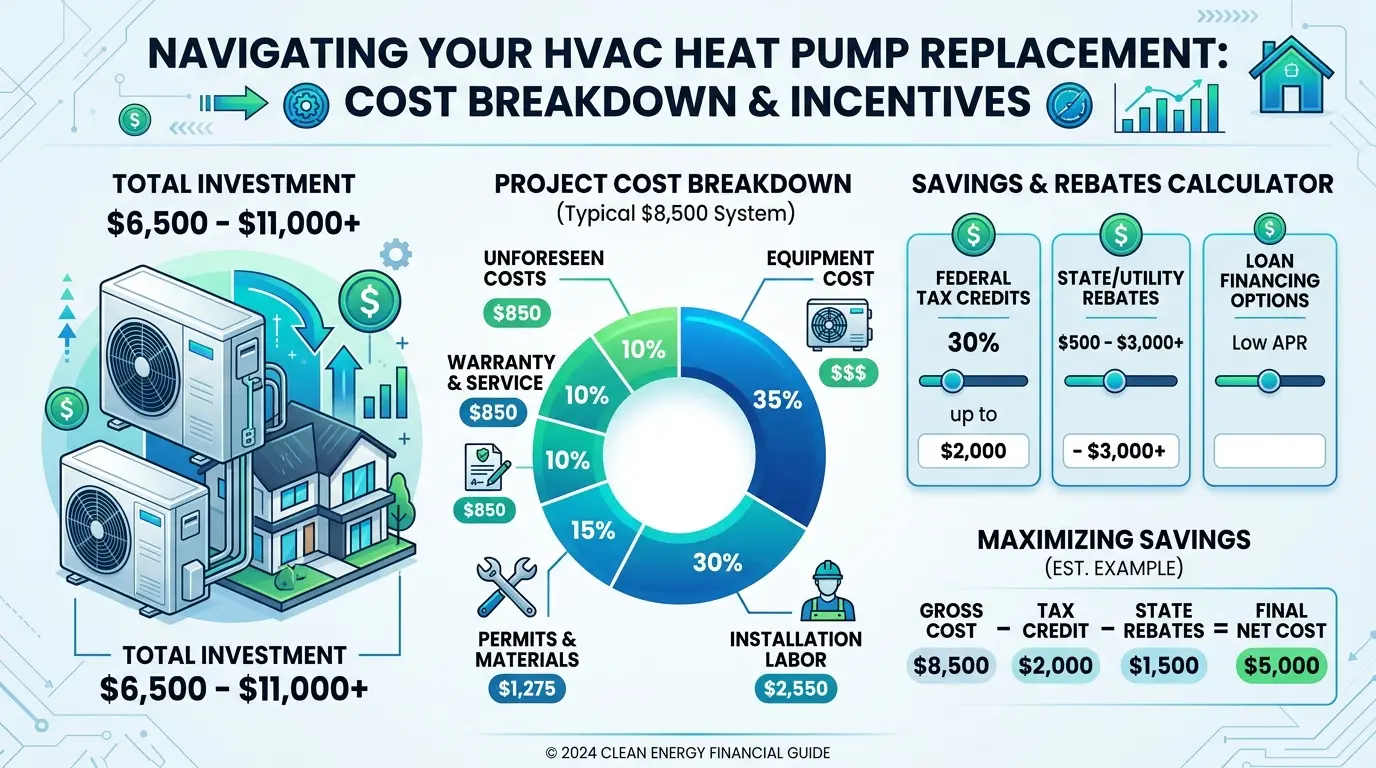
Yes, you can finance a new HVAC system through multiple avenues, including manufacturer financing, dealer programs, personal loans, home equity loans, and specialized energy efficiency programs. Financing allows you to spread the cost of a major heating and cooling upgrade over time rather than paying a large lump sum upfront. By evaluating different interest rates and terms, you can select a plan that fits your monthly budget and long-term financial goals.
How to Buy a New HVAC System
When figuring out how to buy a new HVAC system, the first step is to secure multiple quotes from licensed contractors. The Air Conditioning Contractors of America (ACCA) recommends obtaining at least three written estimates before making a final decision. These estimates should include a Manual J load calculation to ensure the equipment is correctly sized for your home. Buying a new unit is a major investment, so you need to carefully compare the upfront price, the estimated energy savings over time, and the available payment plans.
If you are deciding how to buy a new HVAC system, your primary payment options are cash, credit cards, personal loans, or specialized dealer financing. Each method carries different costs. Paying with cash avoids interest entirely, but it requires significant liquid savings. The total installation cost typically ranges from $5,000 to $12,000 depending on the size of your home and the efficiency rating of the equipment. For a detailed breakdown of current pricing, review our HVAC system cost guide.
Manufacturer and Dealer Financing Programs
Many homeowners choose manufacturer or dealer financing because of the promotional terms offered during the initial purchase. Large HVAC manufacturers often partner with national banks to provide promotional interest rates. For example, you might see offers for 0% annual percentage rate (APR) for 36, 48, or even 60 months.
While a 0% APR offer sounds appealing, you must read the fine print carefully. If you do not pay off the entire balance by the end of the promotional period, the lender may charge deferred interest retroactively from the original purchase date. At an average penalty rate of 28.99%, deferred interest on an $8,000 system can add more than $2,000 to your total cost.
Personal Loans for HVAC Purchases
Personal loans are unsecured loans provided by banks, credit unions, and online lenders. Since they are unsecured, your home is not used as collateral. Approval and interest rates are based heavily on your credit score and debt to income ratio.
In 2026, borrowers with excellent credit (a score above 720) might qualify for personal loan interest rates between 7% and 12%. Borrowers with average credit might see rates between 15% and 25%. If you finance a $10,000 HVAC system with a 5 year personal loan at a 10% interest rate, your monthly payment will be exactly $212.47, and you will pay $2,748.23 in total interest over the life of the loan.
The primary advantage of a personal loan is speed. Most online lenders can approve your application and deposit the funds into your checking account within 24 to 48 hours, which is critical if your heating or cooling system fails unexpectedly during extreme weather conditions.
Home Equity Loans and Lines of Credit (HELOC)
If you have built up significant equity in your property, a home equity loan or a Home Equity Line of Credit (HELOC) might offer the lowest possible interest rates. These loans use your house as collateral, which reduces the risk for the lender and results in lower APRs compared to unsecured personal loans.
A home equity loan provides a lump sum with a fixed interest rate, meaning your monthly payment will never change. A HELOC acts more like a credit card, allowing you to draw funds as needed during a 10 year draw period, usually with a variable interest rate. If you borrow $12,000 at a fixed 7.5% rate over 10 years using a home equity loan, your monthly payment would be $142.44. However, the approval process for home equity products can take two to six weeks, and you may need to pay closing costs ranging from 2% to 5% of the loan amount.
How Your Credit Score Impacts HVAC Financing
Your FICO credit score plays a massive role in determining your eligibility for different loan products and the interest rate you will receive. Lenders use your credit history to assess the risk of lending you money. A score of 740 or higher is generally considered excellent, giving you access to the most competitive rates and 0% promotional dealer financing. If your score falls between 670 and 739, you are still likely to be approved for most personal loans, but you might face slightly higher APRs ranging from 12% to 18%.
If your credit score is below 600, securing a traditional personal loan or dealer financing becomes significantly more difficult. In this scenario, you might need to explore specialized subprime lenders, but these loans often come with exorbitant interest rates exceeding 30%. Alternatively, federal or state energy assistance programs, such as the Weatherization Assistance Program (WAP) managed by the DOE, might offer grants or heavily subsidized loans for low income households whose heating equipment has failed completely.
Government and Energy Efficiency Financing Programs
The Department of Energy (DOE) and the Environmental Protection Agency (EPA) encourage homeowners to upgrade to high efficiency HVAC systems to reduce national energy consumption. State and local governments often sponsor specialized loan programs specifically for energy efficient home improvements.
For example, many states offer Property Assessed Clean Energy (PACE) financing. PACE programs allow you to finance energy efficiency upgrades and pay them back through an assessment on your annual property tax bill. Because the debt is tied to the property rather than the individual, the loan transfers to the new owner if you sell the house before the balance is paid off.
Additionally, local utility companies frequently offer on bill financing, where the loan repayment is simply added to your monthly utility bill. The ENERGY STAR program maintains a database of available financing options and rebates by zip code, which can help you identify subsidized loan programs in your specific geographic area.
Tax Credits and Rebates to Lower Your Financed Amount
Before finalizing your loan amount, you should account for any available tax credits and rebates that reduce your net cost. Under the Inflation Reduction Act, homeowners can claim substantial federal tax credits for installing qualifying high efficiency equipment.
According to IRS.gov, the Energy Efficient Home Improvement Credit allows you to claim 30% of the project cost, up to $2,000 for qualifying heat pumps, and up to $600 for qualifying central air conditioners or natural gas furnaces. If you receive a $2,000 tax credit on a $10,000 heat pump installation, your actual net cost drops to $8,000. Applying this credit to your loan balance can significantly shorten your repayment timeline and reduce your total interest charges.
Comparing Your HVAC Financing Options
Selecting the right payment method requires evaluating interest rates, repayment terms, and potential fees. The table below compares the most common ways to pay for a new heating and cooling system.
| Financing Method | Typical APR | Pros | Cons |
|---|---|---|---|
| Dealer Financing | 0% to 12% | Frequent 0% promotional offers; fast approval. | High retroactive deferred interest if not paid in full. |
| Personal Loan | 7% to 25% | Unsecured; funds available within 24 to 48 hours. | Higher rates for average or poor credit scores. |
| Home Equity Loan | 6% to 9% | Lower interest rates; longer repayment terms available. | Uses home as collateral; closing costs apply; slow approval. |
| PACE Financing | 6% to 10% | Paid via property taxes; debt transfers to new owner. | Not available in all states; requires sufficient property equity. |
Always review the total cost of borrowing before signing a contract. A lower monthly payment spread over 120 months will cost you significantly more in interest than a higher payment over 36 months. Request a complete amortization schedule from your lender so you know exactly how much of your monthly payment goes toward the principal balance versus the interest charges.
When evaluating how to buy a new HVAC system, take the time to compare quotes from multiple contractors, check the database of energy efficiency tax credits, and secure pre approval from several different lenders. Upgrading your heating and cooling equipment is a substantial financial commitment, but the right financing plan will help you achieve a more comfortable, energy efficient home without completely draining your savings account.
Try Our Efficiency Payback Calculator
Calculate monthly energy savings vs monthly financing payments.
Open Efficiency Payback Calculator →