HVAC System Cost Guide 2026: New Installs & Replacement
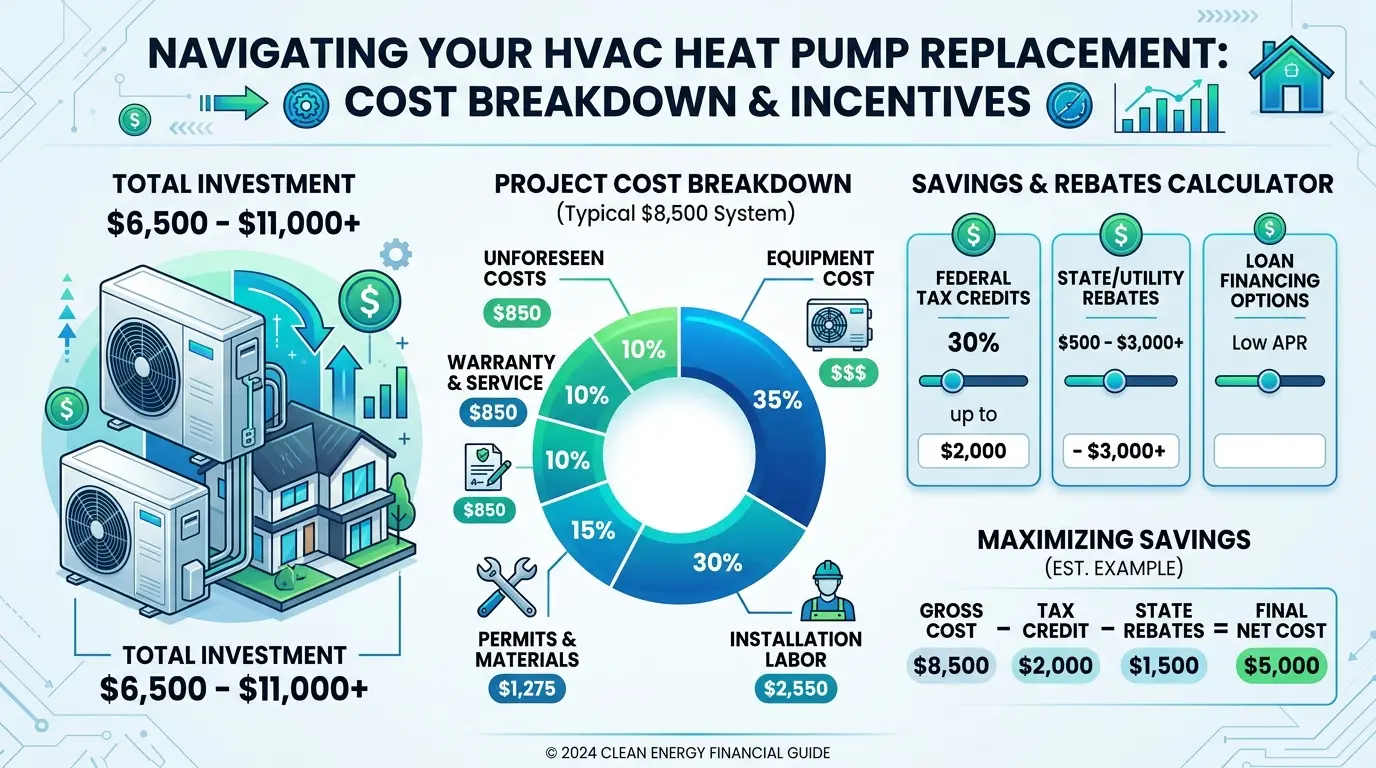
If you are wondering how much does a new hvac unit cost, the national average in 2026 ranges from $5,000 to $10,000 for a standard complete system replacement. For high efficiency models or complex installations involving new ductwork, prices can easily exceed $14,000. These figures include both the equipment and the labor required for a professional installation. The final price tag depends heavily on your home size, the efficiency rating of the equipment, and your geographic location.
How much is a new HVAC?
When determining how much is a new hvac, homeowners must consider the various components that make up the system. A traditional central air conditioning and heating system includes an outdoor condenser, an indoor air handler or furnace, and the evaporator coil. The cost of these components varies based on the brand, capacity, and technological features. Entry level systems from budget brands will naturally cost less than premium, variable speed units from top tier manufacturers.
According to ENERGY.GOV, upgrading to a modern, high efficiency system can reduce cooling and heating costs by 20 to 50 percent. While the upfront investment is significant, the long term utility savings often justify the initial expenditure. Homeowners should also factor in the cost of necessary accessories, such as a new smart thermostat, upgraded air filtration systems, and potential electrical modifications required to support the new equipment.
Additionally, regional climate plays a major role in determining the type of system you need. Homes in the Sun Belt might prioritize a high efficiency air conditioner, whereas residences in the Northeast or Midwest will require a robust gas furnace or cold climate heat pump. Understanding your specific climate needs is crucial for getting an accurate estimate.
How much are HVAC units?
To understand how much are hvac units, we must look at the specific types of equipment available on the market. Air conditioning units, furnaces, and heat pumps all carry different price tags. Standalone air conditioning condensers typically range from $1,500 to $4,000 for the unit alone, excluding labor. Gas furnaces generally cost between $1,200 and $3,500, depending on the Annual Fuel Utilization Efficiency rating.
Heat pumps have become increasingly popular due to their dual heating and cooling capabilities and their energy efficiency. A standard air source heat pump unit can cost anywhere from $2,500 to $6,000. Geothermal heat pumps are much more expensive, with equipment costs reaching $10,000 to $20,000, though they offer unparalleled efficiency and longevity.
| Equipment Type | Average Equipment Cost | Average Installed Cost |
|---|---|---|
| Central Air Conditioner | $1,500 - $4,000 | $3,500 - $7,500 |
| Gas Furnace | $1,200 - $3,500 | $3,000 - $6,500 |
| Air Source Heat Pump | $2,500 - $6,000 | $4,500 - $9,000 |
| Ductless Mini Split | $1,000 - $3,000 | $3,000 - $8,000 |
How much is an HVAC system?
Asking how much is an hvac system requires looking at the total package. A complete system includes the heating and cooling units working in tandem. For a standard 2,000 square foot home, a complete AC and furnace replacement will generally cost around $7,500. However, this price can fluctuate wildly based on the complexity of the installation and the condition of your existing infrastructure.
The Air Conditioning Contractors of America suggests that proper sizing and installation are just as critical as the equipment itself. A poorly installed system will not achieve its rated efficiency and will likely experience premature failure. Therefore, investing in a reputable contractor is essential, even if their initial bid is higher than a competitor. You are paying for their expertise, warranties, and guarantee of proper airflow and refrigerant charge.
If you are concerned about the upfront costs, there are ways to manage the financial burden. Many homeowners opt to explore financing options to spread the cost over several months or years. Manufacturer rebates and promotional financing periods can also significantly reduce the immediate out of pocket expenses associated with a full system upgrade.
How much to replace HVAC system?
Figuring out how much to replace hvac system involves accounting for removal and disposal fees. When you hire a contractor for a replacement, they must carefully recover the old refrigerant in compliance with EPA regulations. They also must dismantle and haul away the old heavy equipment. These disposal and labor fees usually add $300 to $800 to the total project cost.
Another factor in replacement cost is the modification of existing components. If your new air conditioner uses a different refrigerant than your old one, the contractor must thoroughly flush the existing copper lines or install entirely new line sets. Upgrading to a larger capacity unit might also require a larger electrical breaker and thicker gauge wiring, which requires a licensed electrician and additional permit fees.
Permits are typically required by local municipalities for a complete HVAC replacement. Permit fees vary widely by location but generally range from $50 to $300. Your contractor will usually handle the permitting process and include the fee in their final estimate. Ensuring that the work is permitted guarantees that an independent inspector will verify the safety and compliance of the installation.
How much does HVAC cost?
When considering how much does hvac cost, one of the biggest variables is the efficiency rating. Air conditioners are measured by SEER2 (Seasonal Energy Efficiency Ratio 2), and furnaces are measured by AFUE (Annual Fuel Utilization Efficiency). A minimum standard 14.3 SEER2 air conditioner will be significantly cheaper than a premium 22 SEER2 variable speed unit. The price difference between a base model and a top tier model can easily exceed $3,000.
However, the ENERGY STAR program notes that investing in high efficiency equipment can yield substantial returns over the lifespan of the system. A system that operates more efficiently consumes less electricity and natural gas, lowering your monthly utility bills. Over a 15 year lifespan, these savings can offset the higher initial purchase price.
To further incentivize the adoption of high efficiency technology, the federal government offers financial benefits. Homeowners should investigate tax credits and rebates available under the Inflation Reduction Act. The IRS.gov website details the 25C Energy Efficient Home Improvement Credit, which allows homeowners to claim a tax credit of up to $2,000 for qualifying heat pumps and $600 for qualifying air conditioners and furnaces.
How much do HVAC systems cost by home size?
Home size is a primary determinant of how much do hvac systems cost. Larger homes require systems with higher heating and cooling capacities, which are measured in tons for AC units and BTUs for furnaces. A small 1,000 square foot home might only need a 2 ton air conditioner and a 40,000 BTU furnace. In contrast, a 3,000 square foot home could require a 5 ton air conditioner and a 100,000 BTU furnace.
As the capacity of the equipment increases, so does the cost of the raw materials and the manufacturing process. Furthermore, larger homes often feature more complex ductwork layouts and may require multiple zones or even a secondary HVAC system to ensure even temperature distribution. A dual system setup will essentially double your equipment and installation costs.
It is critical to avoid guessing the correct size based solely on square footage. An oversized unit will short cycle, leading to poor humidity control and increased wear and tear. An undersized unit will run constantly and struggle to maintain comfort during extreme weather. To ensure you get the right equipment, consult our comprehensive sizing guide and insist that your contractor performs a Manual J load calculation.
How much is HVAC with new ductwork?
If your home is older and lacks existing ductwork, answering how much is hvac becomes more complicated. Installing new ductwork is a labor intensive process that involves cutting into ceilings, walls, and floors to run sheet metal or flexible tubing. The cost to install new ductwork for a typical home can range from $2,000 to $6,000, depending on the accessibility of the framing and the length of the runs.
Even if you already have ductwork, it might need to be replaced or repaired. According to the DOE, typical duct systems lose 25 to 40 percent of the heating or cooling energy put out by the central furnace, heat pump, or air conditioner. If your ducts are leaky, uninsulated, or incorrectly sized for your new equipment, replacing them is necessary to achieve the desired efficiency.
An alternative to extensive ductwork installation is the ductless mini split system. These systems use individual air handlers mounted on the walls of specific rooms, connected to an outdoor compressor via small refrigerant lines. Ductless systems are highly efficient and perfect for older homes, additions, or spaces where extending traditional ductwork is impractical. While the equipment can be pricey, the savings on ductwork labor often make it a competitive option.
How much does it cost to install an HVAC system?
The labor portion of the estimate is a major factor in how much does it cost to install an hvac system. Professional installation typically accounts for 40 to 50 percent of the total project cost. HVAC technicians possess specialized knowledge in electrical wiring, plumbing, thermodynamics, and refrigerant handling. Their hourly rates reflect this specialized training and the overhead costs of running a licensed, bonded, and insured business.
Labor costs vary significantly by region. In areas with a high cost of living, such as major metropolitan cities on the coasts, you can expect to pay a premium for labor. Conversely, labor rates in rural areas or regions with a lower cost of living will generally be more affordable. On average, you can expect labor charges for a full system installation to range from $1,500 to $3,500.
The complexity of the job also dictates the labor cost. Installing a system in an easily accessible basement or garage will take less time and cost less than installing a system in a cramped attic or a tight crawlspace. Jobs that require extensive modifications to the home structure, such as framing new return air drops or widening attic access doors, will also incur higher labor fees.
How much for HVAC replacement vs repair?
Homeowners often struggle with deciding how much for hvac replacement is worth it compared to a repair. A common rule of thumb is the 5,000 rule. You multiply the age of the equipment by the estimated cost of the repair. If the resulting number is greater than $5,000, replacement is the more financially sound decision. For example, if your system is 12 years old and needs a $500 compressor repair, the calculation is 12 times 500, which equals $6,000. In this scenario, replacing the aging unit is recommended.
Age is a critical factor. Most central air conditioners and furnaces have a lifespan of 15 to 20 years. If your system is approaching or has exceeded this age, sinking money into expensive repairs is generally unwise, as other components are likely to fail soon. Additionally, older systems use outdated technology and obsolete refrigerants like R-22, which is now incredibly expensive to source.
On the other hand, if your system is only five years old and is still under the manufacturer warranty, a repair is almost always the better choice. Routine maintenance and prompt attention to minor issues can extend the life of your equipment and delay the hefty expense of a full replacement. Always consult with a trusted technician to weigh your options carefully.
Have HVAC prices gone up?
Many consumers are asking have hvac prices gone up in recent years, and the answer is a definitive yes. The HVAC industry has experienced significant price increases driven by a combination of factors. Inflation has affected the cost of raw materials such as copper, aluminum, and steel, which are heavily used in manufacturing HVAC equipment. Transportation and logistics costs have also risen, adding to the final retail price.
Furthermore, regulatory changes have mandated the transition to new, more environmentally friendly refrigerants. In 2025 and 2026, the EPA mandated the phase down of R-410A in favor of mildly flammable A2L refrigerants like R-454B and R-32. This transition required manufacturers to redesign their equipment with new safety features and updated components, and these research and development costs have been passed down to the consumer.
The introduction of the new SEER2 testing protocols by the Department of Energy also contributed to rising costs. The more stringent testing procedures required manufacturers to build more robust and efficient equipment to meet the new minimum standards. While these advancements result in better performing and more energy efficient systems for homeowners, they undeniably increase the upfront purchase price.
Do you tip HVAC installers?
A common question during the installation process is do you tip hvac installers. Unlike the hospitality industry, tipping is not expected or required in the HVAC trade. Technicians are skilled tradespeople who are generally compensated fairly through their hourly wages or project based pay structures. They do not rely on tips to make a living wage.
However, if you feel that the installation crew went above and beyond their standard duties, you are certainly welcome to show your appreciation. This could be in the form of a small cash tip of $20 to $50 per person, especially if they worked in extreme heat or difficult conditions like a sweltering attic. If they completed a highly complex job flawlessly and left your home spotless, a monetary tip is a generous gesture.
If you prefer not to give cash, there are other excellent ways to show your gratitude. Offering cold bottled water, sports drinks, or hot coffee is always deeply appreciated by crews working long hours. Providing a simple lunch, such as ordering a pizza or sandwiches, is another fantastic way to thank the technicians for their hard work and dedication to your home comfort.
Ultimately, the best way to determine your total investment is to obtain multiple written estimates from licensed, bonded, and insured contractors in your area. By comparing bids, checking references, and understanding the specific details of the proposed equipment, you can make an informed decision that balances upfront costs with long term efficiency, comfort, and reliability for years to come.
Try Our Efficiency Payback Calculator
Calculate your annual energy savings when upgrading to high-SEER equipment.
Open Efficiency Payback Calculator →