How to Reset & Troubleshoot Your HVAC System
Wondering how to reset hvac system correctly when it malfunctions? To properly reset your heating and cooling equipment, first turn off the thermostat. Next, locate the circuit breaker for your HVAC unit in your main electrical panel and switch it to the "off" position. Wait for 60 seconds to allow the system to clear its electrical charge. Finally, switch the breaker back on and set your thermostat to your desired temperature. This simple power cycle often resolves minor electrical glitches and restores normal operation.
Homeowners often encounter situations where their climate control systems behave erratically or stop responding. Whether you are dealing with a power surge after a storm or a system that blows lukewarm air, a reset is the first line of defense. Knowing the correct sequence prevents electrical damage to the compressor and the control board. If your system still fails to operate correctly after a hard reset, you will need to perform further troubleshooting or consult a licensed technician.
How to turn off hvac system
Before you perform maintenance, replace air filters, or attempt any repairs, you must know how to turn off hvac system entirely. Turning off the thermostat is only the first step. The thermostat only controls the low voltage signals sent to the system. To eliminate the risk of electrical shock and ensure the equipment does not activate unexpectedly, you must disconnect the main power supply.
Start by locating the indoor air handler or furnace. There is typically a service switch mounted on or near the unit that looks exactly like a standard light switch. Flip this switch to the off position. Next, head outside to your condenser unit. Mounted on the exterior wall near the condenser, you will find a weatherproof disconnect box. Open the metal lid and either pull the disconnect block out or switch the breaker inside to the off position. Finally, navigate to your home electrical panel and switch off the dedicated 240 volt double pole breaker labeled for the AC or Heat Pump. By disconnecting power at all three locations, you guarantee maximum safety.
Safety should always be your top priority. According to the EPA, accidental electrical discharge during unauthorized HVAC maintenance results in significant injuries each year. By following proper lockout procedures, you protect both yourself and the sensitive electronic components within your system. Once the power is disconnected, you can safely clean the coils, clear the condensate drain line, or inspect the blower motor.
How to improve hvac efficiency
Once your system is running correctly, you might wonder how to improve hvac efficiency to lower your monthly utility bills. According to ENERGY STAR, heating and cooling account for nearly half of the energy consumption in a typical home. Simple adjustments and regular maintenance can yield substantial savings over the lifespan of your equipment.
The most effective method for improving efficiency is replacing the air filter regularly. A clogged filter restricts airflow, forcing the blower motor to work harder and consume more electricity. The DOE recommends replacing one inch pleated filters every 30 to 90 days. During peak summer or winter months, check the filter every 30 days. Replacing a dirty filter with a clean one can lower your air conditioner energy consumption by 5 to 15 percent.
Another crucial factor is ductwork integrity. Leaky ducts can lose up to 30 percent of the conditioned air before it even reaches your living spaces. Inspect the exposed ductwork in your attic, basement, or crawlspace. Seal any visible gaps, cracks, or disconnected joints using mastic sealant or foil tape. Never use standard cloth duct tape, as the adhesive degrades rapidly under extreme temperature fluctuations. Proper duct sealing ensures that every cubic foot of air you pay to heat or cool actually reaches your rooms.
| Action | Estimated Savings (%) | Frequency |
|---|---|---|
| Replacing Air Filters | 5 to 15 percent | Every 30 to 90 days |
| Sealing Leaky Ducts | Up to 30 percent | One time fix |
| Programmable Thermostat | 10 percent annually | Daily schedule |
How to make hvac more efficient
If you are looking for long term strategies regarding how to make hvac more efficient, installing a programmable or smart thermostat is an excellent investment. The DOE states that you can save up to 10 percent a year on heating and cooling by simply turning your thermostat back 7 to 10 degrees for 8 hours a day. A smart thermostat automates this process, learning your schedule and adjusting temperatures when you are asleep or away at work.
Proper insulation also plays a massive role in system efficiency. Even the highest rated SEER equipment will struggle to maintain comfortable temperatures in a poorly insulated house. Ensure your attic possesses at least R-38 insulation, which typically equals 10 to 14 inches of blown in cellulose or fiberglass batts. By preventing heat transfer through your ceiling, you significantly reduce the thermal load on your HVAC system, allowing it to run shorter cycles and consume less energy.
Consider the area around your outdoor condenser unit as well. The system requires adequate airflow to dissipate the heat removed from your home. Keep a minimum clearance of 24 inches around the entire perimeter of the condenser. Trim back bushes, remove tall grass, and clear away debris or leaves that accumulate near the coil fins. If the unit is suffocated by vegetation, the compressor temperature will spike, leading to increased amperage draw and potential mechanical failure.
Routine Maintenance Practices
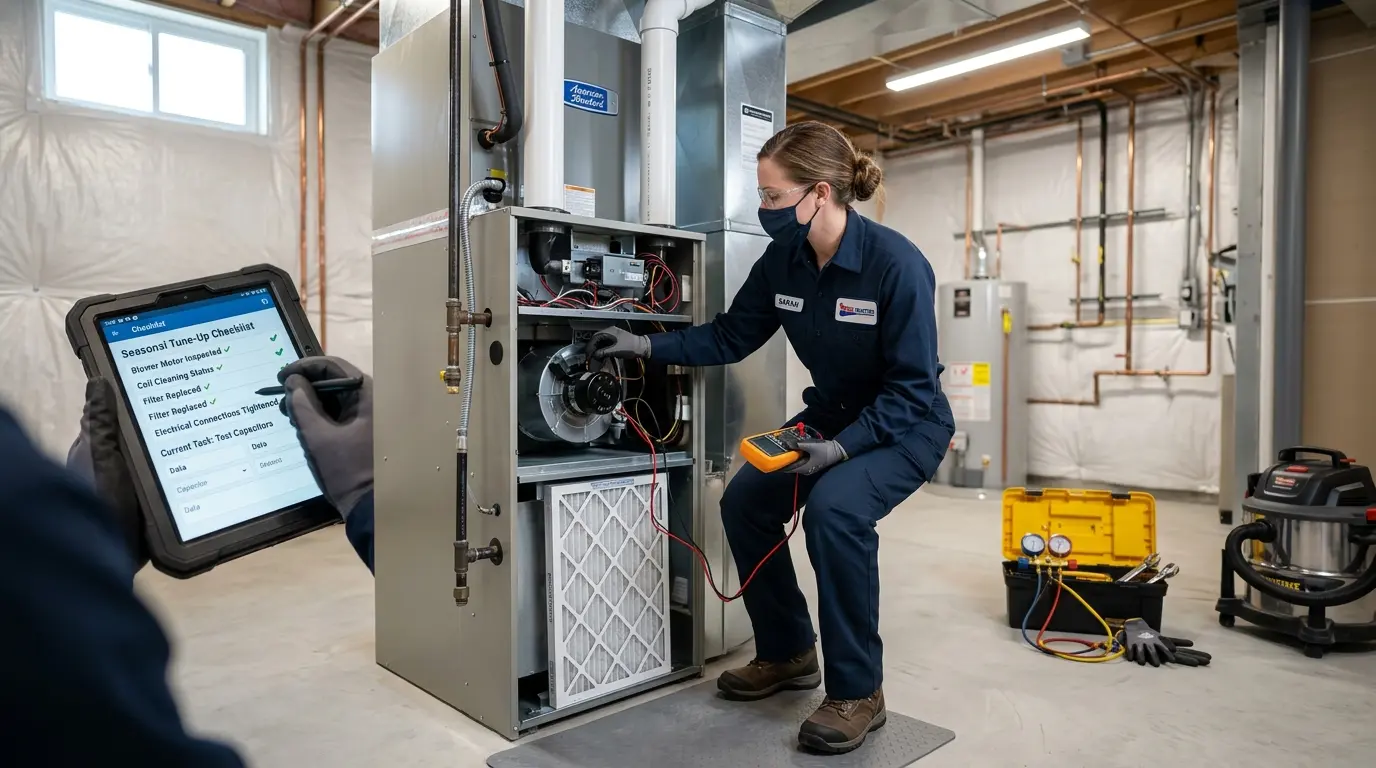
Preventative maintenance is absolutely critical for avoiding unexpected breakdowns and keeping operating costs low. While you can perform basic tasks like filter changes yourself, scheduling professional maintenance once a year for heating and once a year for cooling is highly recommended. ACCA guidelines suggest having a certified technician inspect electrical connections, measure refrigerant charge, and clean the evaporator coil to maintain peak performance.
During a professional tune up, the technician will check the capacitor for bulging or leaking, measure the amperage draw of the compressor and blower motor, and calibrate the thermostat. They will also inspect the heat exchanger for cracks, which is vital for preventing carbon monoxide leaks in gas furnaces. Investing between 100 dollars and 150 dollars annually on a maintenance agreement often pays for itself by preventing catastrophic failures that cost thousands of dollars to repair.
To learn more about comprehensive upkeep schedules and checklists, read our detailed HVAC Maintenance Guide. Following a structured maintenance plan extends the lifespan of your equipment by up to 40 percent, ensuring you maximize your return on investment.
Recognizing When to Replace Your System
Even with meticulous maintenance and prompt troubleshooting, all HVAC systems eventually reach the end of their operational lifespan. The average air conditioner lasts between 12 and 15 years, while a gas furnace may function reliably for 15 to 20 years. If your equipment frequently requires resetting, or if repair costs start exceeding 50 percent of the price of a new unit, replacement is often the most economical choice.
Upgrading to a new, high efficiency system provides immediate benefits. Modern variable speed compressors and electronically commutated blower motors consume significantly less electricity than older single stage models. Under the Inflation Reduction Act outlined by IRS.gov, homeowners can qualify for federal tax credits up to 2000 dollars when installing qualifying high efficiency heat pumps. This financial incentive makes upgrading far more accessible for the average consumer.
Understanding the basics of resetting your system, practicing regular maintenance, and implementing efficiency strategies will keep your home comfortable year round. Always prioritize safety when interacting with high voltage components, and consult a professional when you encounter complex mechanical issues beyond basic troubleshooting.
Try Our Wire Size Calculator
Verify proper electrical wire gauge for breaker panels.
Open Wire Size Calculator →