HVAC Capacitor Guide: Function, Testing & Replacement
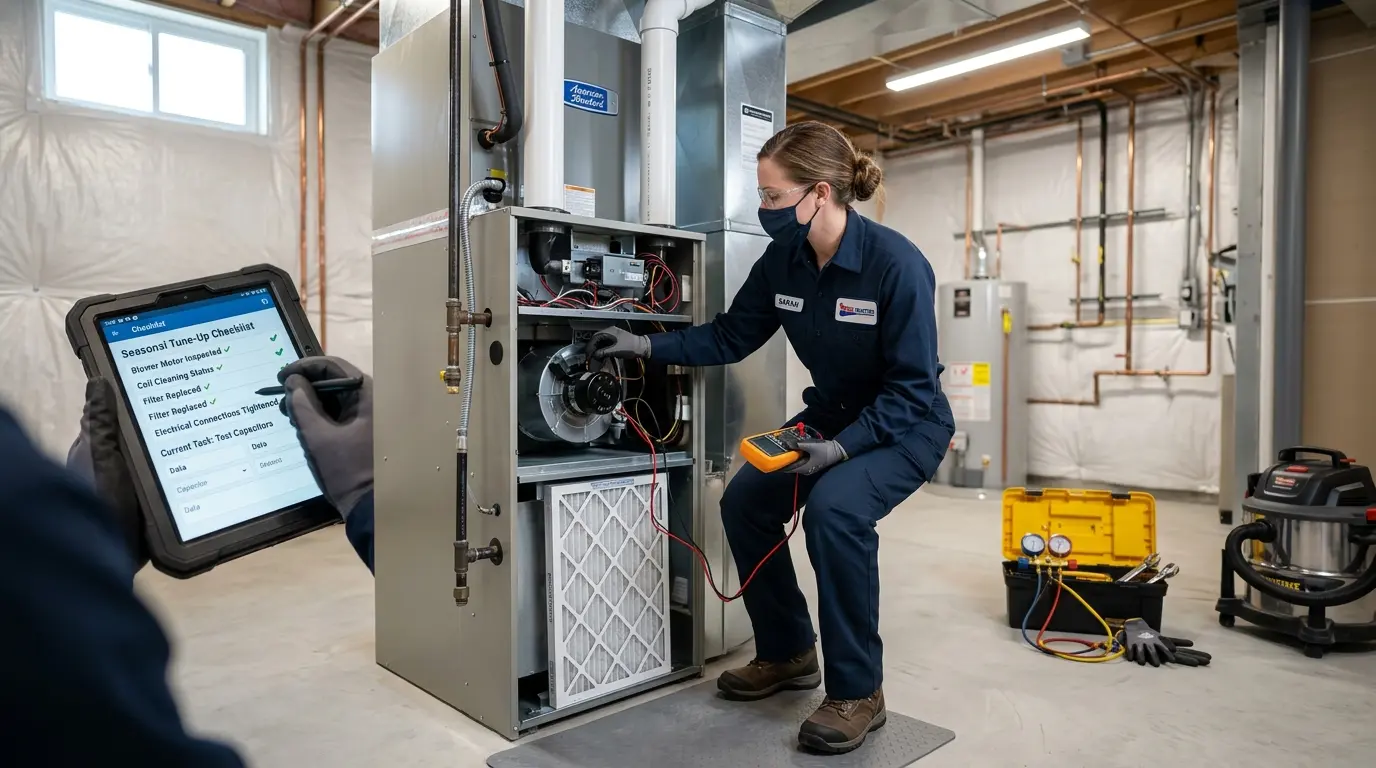
HVAC Capacitor Guide: Function, Testing & Replacement
If you are wondering what does a capacitor do in hvac, it acts as a temporary power storage device that delivers a massive jolt of electricity to start and run the heavy motors in your heating and cooling system. The compressor, the blower motor, and the condenser fan require significantly more energy to start than your home electrical grid can supply instantly. The capacitor bridges this gap by releasing stored energy, providing up to 400 percent more voltage than normal running requirements to overcome motor inertia. Once the motor is spinning, the capacitor continuously regulates the electrical current to maintain a steady, efficient operation.
Modern air conditioning systems rely on this precise electrical regulation to meet the strict efficiency standards set by the Department of Energy (DOE). When a capacitor begins to fail, the motors draw excessive current, which increases heat and wear on the components. This added strain can dramatically reduce the lifespan of your entire HVAC system.
Understanding Start Capacitors and Run Capacitors
HVAC systems utilize two distinct types of capacitors to manage electrical loads. A start capacitor provides the initial surge of energy required to get a motor turning. These devices typically boast a high capacitance rating, usually between 70 and 120 microfarads (µF). They stay in the electrical circuit for only a fraction of a second. Once the motor reaches approximately 75 percent of its full operating speed, a relay disconnects the start capacitor from the circuit.
A run capacitor remains in the circuit continuously to optimize the power factor and stabilize the voltage going to the motor. Run capacitors have a lower capacitance rating, typically ranging from 5 to 80 microfarads. Many residential air conditioners use a dual run capacitor, which combines two capacitors into a single cylindrical casing. One side powers the compressor motor, while the other side powers the condenser fan motor. A common dual run capacitor rating is 35/5 µF at 440 volts, meaning it provides 35 microfarads to the compressor and 5 microfarads to the fan.
how to check hvac capacitor Performance and Health
Knowing how to check hvac capacitor condition can save you from a complete system breakdown during extreme weather. Visual inspection is the first line of defense. A healthy capacitor features a flat top and smooth cylindrical sides. If the top appears domed, swollen, or bulging, the internal pressure has built up due to excessive heat or electrical failure. This bulging is a definitive sign that the component must be replaced immediately.
You should also inspect the terminals for rust, corrosion, or leaking dielectric fluid. The fluid inside helps dissipate heat, and any leakage indicates a compromised seal. Listen closely to the outdoor condenser unit when the thermostat calls for cooling. A persistent humming or clicking noise without the fan or compressor engaging often points to a failed capacitor. The motor is trying to start but lacks the necessary electrical boost, causing it to stall and overheat.
According to guidelines from the Air Conditioning Contractors of America (ACCA), operating an air conditioner with a degraded capacitor will force the compressor to work harder, pulling up to 20 percent more amperage. This elevated current draw leads to premature compressor failure, turning a simple 50 dollar repair into a catastrophic 2,000 dollar system replacement.
how to test a capacitor hvac Using a Multimeter
To determine the precise electrical health of the component, you must understand how to test a capacitor hvac safely using a digital multimeter capable of measuring capacitance. Because capacitors store lethal amounts of energy even when the power is disconnected, safety is paramount. Always shut off the power at the main electrical panel and the outdoor disconnect box before opening the service panel.
After confirming the power is off with a non contact voltage tester, you must discharge the capacitor. Use an insulated screwdriver to bridge the terminals. Touch the metal shaft of the screwdriver across the common terminal (labeled C) and the hermetic compressor terminal (labeled HERM), then across the common terminal and the fan terminal (labeled FAN). This action safely releases any stored energy.
Disconnect the wires, taking clear photographs to ensure proper reconnection later. Set your digital multimeter to the capacitance setting, typically indicated by a symbol resembling two parallel lines. Place one multimeter probe on the C terminal and the other on the HERM terminal. Wait a few seconds for the reading to stabilize. Compare this measurement to the rating printed on the label. Next, move the probe from the HERM terminal to the FAN terminal to measure the second side of the dual capacitor.
Capacitors are manufactured with a tolerance range, usually plus or minus 6 percent. If your capacitor is rated for 35 microfarads, an acceptable reading falls between 32.9 and 37.1 microfarads. If the multimeter displays a value outside this acceptable tolerance window, or if it reads zero, the capacitor has failed and requires replacement.
where to buy hvac capacitor Replacements
When a replacement is necessary, homeowners frequently ask where to buy hvac capacitor parts that are reliable and exact matches. The most critical factor is matching the microfarad rating exactly. You cannot substitute a 40 µF capacitor for a 35 µF model without risking severe damage to the compressor motor. However, you can use a capacitor with a higher voltage rating than the original, such as using a 440 volt capacitor to replace a 370 volt model, because the voltage rating represents the maximum limit the component can handle safely.
Local HVAC supply houses are excellent sources for replacement parts. While some wholesale distributors only sell to licensed contractors, many specialized appliance parts stores are open to the public and carry a wide selection of motor run capacitors. These local retailers offer the advantage of same day availability, which is crucial during a mid summer heatwave.
Online marketplaces and dedicated HVAC parts websites provide extensive inventories and often lower prices. When purchasing online, verify that the supplier is reputable and the parts are brand new OEM (Original Equipment Manufacturer) or high quality aftermarket replacements. Avoid purchasing used or refurbished capacitors, as their internal components degrade over time regardless of usage.
Comparing Capacitor Options and Specifications
To assist in your replacement part search, review the following comparison of common capacitor specifications found in residential air conditioning systems.
| Capacitor Type | Typical Rating (µF) | Voltage Range | Primary Application |
|---|---|---|---|
| Single Run Capacitor | 5 to 15 µF | 370V or 440V | Dedicated blower or small fan motors |
| Dual Run Capacitor | 35/5 to 80/7.5 µF | 370V or 440V | Outdoor condenser (Compressor and Fan) |
| Start Capacitor | 70 to 300+ µF | 110V to 330V | Hard start kits for aging compressors |
The Role of Hard Start Kits and Capacitors
Sometimes a standard run capacitor is not enough to get an aging or tight compressor turning. In these scenarios, technicians often install a hard start kit. A hard start kit is an assembly that contains a powerful start capacitor and a potential relay. This addition provides a massive influx of torque, sometimes increasing the starting power by up to 300 percent. By significantly reducing the amount of time the compressor spends in the high amperage startup phase, the hard start kit prevents excessive heat buildup and protects the delicate electrical windings inside the motor.
The Department of Energy notes that older air conditioning units often suffer from degraded mechanical efficiency, making them harder to start. A hard start kit acts as an electrical assist, extending the viable lifespan of the equipment and delaying the need for a costly full system replacement. If your lights dim momentarily every time the air conditioner turns on, a hard start kit combined with a fresh run capacitor is frequently the recommended solution.
Integrating Capacitors into Routine Maintenance
Checking the electrical integrity of your capacitors should be a mandatory step in your annual cooling system tune up. The Environmental Protection Agency (EPA) emphasizes that well maintained cooling systems consume 15 to 20 percent less energy than neglected units. By proactively testing your capacitors, you can identify a failing component before it causes the compressor to lock up.
A weak run capacitor forces the air conditioner to draw excessive power, driving up your monthly utility bills. Routine checks ensure the motors are receiving the clean, consistent voltage they need for optimal performance. For a comprehensive overview of all necessary seasonal checks, including coil cleaning and refrigerant evaluation, consult our detailed HVAC maintenance guide.
If you lack the proper diagnostic tools or feel uncomfortable working around high voltage electrical components, always hire a certified technician. Professional HVAC contractors carry advanced testing equipment and a wide array of replacement parts on their service trucks. They can safely evaluate the entire electrical circuit, verify the amp draw on all motors, and guarantee that your air conditioner operates at peak efficiency throughout the hottest months of the year.
Try Our Motor Amps Calculator
Calculate motor electrical current load and starting capacitance.
Open Motor Amps Calculator →