Does Home Insurance Cover HVAC? What's Actually Covered
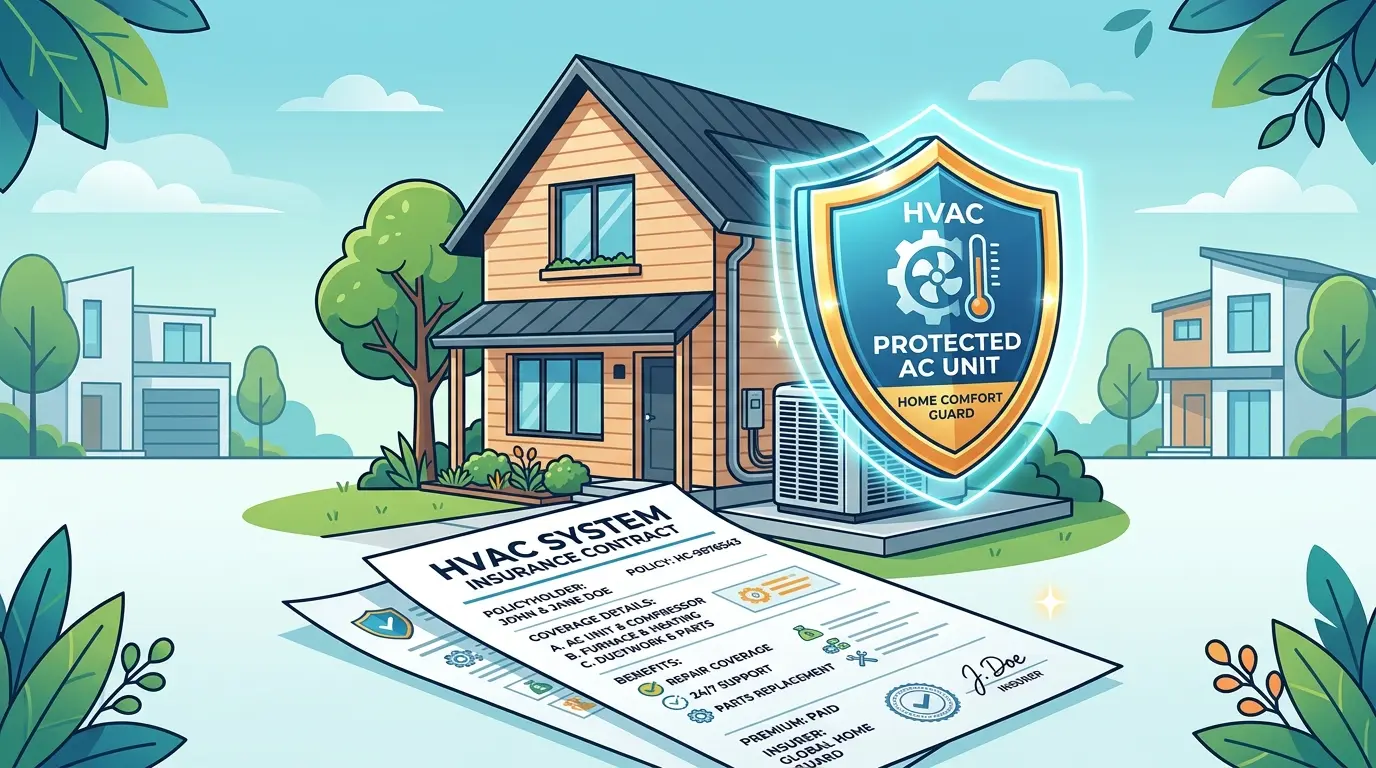
Does homeowners insurance cover HVAC systems? The short answer is yes, but only if the damage is caused by a covered peril such as a fire, lightning strike, vandalism, or a falling tree. If your air conditioner or furnace breaks down because of normal wear and tear, old age, or lack of proper maintenance, your standard homeowners insurance policy will not pay for repairs or replacement. Understanding exactly what your policy covers can save you from unexpected financial burdens when disaster strikes your heating and cooling equipment.
Understanding Covered Perils for HVAC Systems
A standard homeowners insurance policy (commonly known as HO-3) covers your home and attached structures against specific events called perils. When asking if insurance will cover your HVAC system, you must first determine what caused the damage. The system itself is considered part of the dwelling, so it falls under your dwelling coverage. Covered perils typically include severe weather events, accidental catastrophes, and malicious human acts.
One of the most common claims involves lightning strikes. If lightning strikes your home and causes a massive power surge that destroys your compressor and circuit boards, your insurance policy is highly likely to cover the damage. According to the Insurance Information Institute, lightning strikes cause hundreds of millions of dollars in residential damage each year. A sudden and accidental power surge resulting from a lightning strike usually qualifies for a claim, whereas a slow deterioration of electrical components does not.
Fire is another universally covered peril. If a house fire damages or completely destroys your indoor furnace or air handler, your policy will help cover the cost to replace the unit. Similarly, if a heavy tree branch falls during a severe windstorm and crushes your outdoor condenser unit, the resulting damage is typically covered under the windstorm and hail provisions of your policy.
Vandalism and theft are also covered perils. Copper theft remains a significant issue for homeowners, as thieves strip outdoor air conditioning units for scrap metal. If someone steals copper lines from your condenser or vandalizes the unit while attempting a theft, you can file a claim to have the system repaired or replaced. In all these scenarios, your insurance company will require you to pay your deductible before they cover the remaining costs up to your policy limits.
When Does Home Insurance Cover HVAC Replacement?
Many homeowners wonder, does home insurance cover hvac replacement when the unit is simply old or breaks down unexpectedly? The definitive answer is no. Homeowners insurance is not a maintenance contract. It is designed to protect you against sudden, accidental, and catastrophic events, not the inevitable breakdown of mechanical equipment over time.
If your fifteen-year-old heat pump simply stops working on a hot July afternoon because the compressor finally failed from years of continuous use, your insurance company will deny the claim. Mechanical failure resulting from wear and tear is universally excluded from standard homeowners insurance policies. The financial responsibility for replacing an aging unit rests entirely on the homeowner.
Lack of maintenance is another reason an insurance company might deny a claim, even if a covered peril seems to be involved. Insurance adjusters will investigate the condition of your equipment. The Air Conditioning Contractors of America (ACCA) strongly recommends annual professional maintenance for all HVAC systems. If an adjuster determines that a fire started in your furnace because you never changed the filters and allowed massive amounts of combustible dust to accumulate over a decade, they might argue that your negligence caused the damage. Proper documentation of annual maintenance by licensed professionals proves that you maintained the equipment responsibly.
Certain natural disasters are also excluded from standard policies. Damage caused by floods and earthquakes is almost never covered by a basic homeowners insurance policy. If heavy rains cause a nearby creek to overflow and submerge your outdoor AC condenser, your standard policy will not cover the replacement. You would need a separate flood insurance policy through the National Flood Insurance Program to protect against rising water damage.
Actual Cash Value vs. Replacement Cost Coverage
If you experience a covered loss, the amount of money your insurance company pays out depends entirely on the type of coverage you selected when you purchased your policy. The two main types of settlement options are actual cash value and replacement cost value. Understanding the difference between these two valuation methods is critical when facing a major HVAC loss.
Actual cash value takes depreciation into account. HVAC systems lose value every year they are in operation. If a falling tree destroys your ten-year-old air conditioner, an actual cash value policy will not pay you enough money to buy a brand-new unit. The insurance adjuster will calculate the lifespan of the unit (often considered to be 15 to 20 years) and deduct the value of ten years of use. If a new comparable system costs $8,000, and your unit has depreciated by 50 percent, the insurance company will only offer a settlement of $4,000. Once you subtract your $1,000 deductible, you will receive a check for $3,000, leaving you responsible for the remaining $5,000 out of pocket.
Replacement cost coverage is far superior. If you have replacement cost coverage on your dwelling, the insurance company will pay the full cost to replace your destroyed system with a brand-new system of similar kind and quality, without deducting any money for depreciation. Using the previous example, if a new system costs $8,000, the insurance company will pay $7,000 (the full cost minus your $1,000 deductible). You will not have to cover the depreciation gap.
| Coverage Type | How It Works | Out-of-Pocket Expense for $8,000 Replacement (10-yr old unit, $1,000 Deductible) |
|---|---|---|
| Actual Cash Value | Deducts depreciation based on the age of the unit. | $5,000 ($4,000 depreciation + $1,000 deductible) |
| Replacement Cost Value | Pays full cost for a new unit of similar quality, no depreciation. | $1,000 (Only the deductible) |
The Claims Process for HVAC Damage
If your HVAC system suffers damage from a sudden and accidental event, you must take immediate action to protect your home and initiate the claims process. Navigating the claims process requires careful documentation and clear communication with your insurance provider.
First, ensure the safety of your family. If the damage involves fire or major electrical issues, evacuate the home and contact emergency services. Once the immediate danger has passed, you must mitigate further damage. For example, if a tree punctured your roof and crushed your indoor air handler, you should place a tarp over the roof to prevent rainwater from destroying your drywall and flooring. Insurance policies require homeowners to take reasonable steps to prevent secondary damage.
Next, document the damage extensively. Take clear, high-resolution photographs and videos of the damaged HVAC equipment and any surrounding damage to the property. Do not throw away any broken parts or attempt to clean up the damaged equipment until an insurance adjuster has inspected the scene. The adjuster needs to see exactly what happened to verify the cause of the loss.
Contact your insurance agent or the company's claims department as soon as possible. Be prepared to provide the date and time of the incident, a description of the damage, and your policy number. The insurance company will assign a claims adjuster to your case. The adjuster will likely visit your home to inspect the damage, interview you about the incident, and determine if the cause is a covered peril.
You should also hire a licensed HVAC contractor to inspect the system independently. The contractor will diagnose the exact cause of the failure and provide a detailed written estimate for repairs or replacement. Providing this professional estimate to your insurance adjuster helps ensure you receive a fair settlement. If the adjuster and your contractor disagree on the scope of damage or the cost of repairs, you can request a second opinion or escalate the issue within the insurance company.
Alternatives: Home Warranties and Equipment Breakdown Coverage
Because standard homeowners insurance does not cover mechanical failure or normal wear and tear, many homeowners seek alternative ways to protect themselves from massive repair bills. The two most common options are home warranties and equipment breakdown endorsements.
A home warranty is a separate service contract that covers the repair or replacement of major home systems and appliances that break down due to normal wear and tear. If your fifteen-year-old air conditioner stops cooling because the compressor fails, a home warranty might cover the replacement cost. You will typically pay an annual premium of $400 to $800, plus a service fee of $75 to $125 each time a technician visits your home. For a detailed exploration of how these contracts work, read our comprehensive guide on does home warranty cover HVAC replacement.
Another option is adding an equipment breakdown endorsement to your existing homeowners insurance policy. This optional coverage protects against mechanical and electrical failures that are typically excluded from standard policies. For a relatively low additional premium (often $30 to $50 per year), this endorsement can cover repairing or replacing your HVAC system if it suffers a sudden mechanical failure not caused by normal wear and tear. For example, if a motor suddenly seizes up without warning, an equipment breakdown endorsement might cover the repair. However, this coverage still requires you to pay your standard policy deductible, which can range from $1,000 to $2,500.
Financial Assistance, Tax Credits, and Upgrades
If your HVAC system is damaged and your insurance claim is approved, you have an opportunity to upgrade to a more energy-efficient model. Insurance policies typically pay for a system of similar kind and quality, but you can choose to take the settlement money and pay the difference out of pocket to upgrade to a high-efficiency unit. Choosing a more efficient system can lower your monthly utility bills and qualify you for significant tax credits and rebates.
The Department of Energy (DOE) and the Environmental Protection Agency (EPA) strongly encourage homeowners to install ENERGY STAR certified heating and cooling equipment. ENERGY STAR certified air conditioners and heat pumps use significantly less energy than standard models, reducing greenhouse gas emissions and saving homeowners money.
Under the Inflation Reduction Act, homeowners can claim substantial federal tax credits for installing qualified high-efficiency HVAC equipment. According to IRS.gov, the Energy Efficient Home Improvement Credit allows you to claim 30 percent of the project cost for eligible installations. This includes a maximum credit of $2,000 for qualified heat pumps and heat pump water heaters, and up to $600 for qualified central air conditioners and furnaces. These tax credits provide a massive financial incentive to invest in top-tier equipment when replacing a damaged system.
State and local governments, as well as utility companies, often offer additional rebates for installing energy-efficient systems. The Database of State Incentives for Renewables and Efficiency (DSIRE), a project funded by the Department of Energy, provides a comprehensive list of available rebates in every state. Combining an insurance settlement, federal tax credits, and local utility rebates can make upgrading to a premium, high-efficiency HVAC system surprisingly affordable.
Cost Considerations for Replacing a System
Understanding the full cost of replacing an HVAC system helps you make informed decisions during the insurance claims process. A standard central air conditioning system and gas furnace replacement typically costs between $6,000 and $12,000, depending on the size of your home, the efficiency rating of the equipment, and the complexity of the installation.
High-efficiency heat pumps, which provide both heating and cooling in a single unit, generally cost between $8,000 and $15,000 to install. If your home requires extensive ductwork modifications or electrical upgrades to accommodate the new system, the total project cost can easily exceed $20,000. Before committing to a replacement, we recommend reading our detailed HVAC system cost guide 2026 to understand current market pricing and labor rates in your specific region.
Proactive Steps to Protect Your HVAC Investment
While insurance provides a safety net for sudden disasters, proactive maintenance remains the best way to protect your heating and cooling equipment. Taking simple steps throughout the year will extend the lifespan of your system and reduce the likelihood of unexpected breakdowns.
First, replace your indoor air filters regularly. Most manufacturers recommend inspecting filters monthly and replacing them every 30 to 90 days. A clogged air filter forces the blower motor to work harder, increasing energy consumption and accelerating wear and tear on internal components. Keeping the airflow clear is the single most effective maintenance task a homeowner can perform.
Second, keep the area around your outdoor condenser unit clear of debris. Maintain a clearance of at least two feet around the unit to ensure adequate airflow. Trim back bushes, remove tall grass, and clear away fallen leaves or branches. Restricted airflow at the condenser forces the compressor to run hotter and longer, significantly reducing its operating lifespan.
Third, schedule professional maintenance twice a year. Have a licensed HVAC technician inspect your cooling system in the spring and your heating system in the fall. During a tune-up, the technician will clean the coils, check refrigerant levels, tighten electrical connections, and lubricate moving parts. The Air Conditioning Contractors of America (ACCA) emphasizes that regular maintenance prevents small issues from developing into catastrophic failures.
Finally, consider installing a whole-home surge protector. While insurance covers lightning strikes, the claims process is stressful, and you will still have to pay your deductible. A whole-home surge protector installed at your main electrical panel by a licensed electrician can block massive voltage spikes before they reach your delicate HVAC circuit boards. This simple upgrade costs a few hundred dollars but can save you thousands of dollars in sudden equipment damage and lost comfort.
Navigating the intersection of homeowners insurance and HVAC systems requires understanding the exact language in your policy. By knowing what perils are covered, the difference between actual cash value and replacement cost, and the specific exclusions regarding wear and tear, you can handle unexpected damage with confidence and clarity.
Try Our System ROI Calculator
Calculate out-of-pocket costs vs insurance coverage returns.
Open System ROI Calculator →