Does a New HVAC System Increase Home Value?
Does a New HVAC System Increase Home Value?
Yes, a new HVAC system increases home value. Homeowners typically recoup between 50 to 70 percent of their investment when selling their property. A modern, energy-efficient heating and cooling system appeals strongly to potential buyers by reducing utility bills and eliminating the immediate need for costly replacements. According to data from the National Association of Realtors, buyers prioritize updated essential systems over cosmetic upgrades, making a new HVAC unit a strategic financial decision for property owners preparing to sell.
Understanding the Return on Investment for a New HVAC System
When evaluating residential property upgrades, the return on investment for replacing an aging heating and cooling system remains consistently high. While exact figures fluctuate based on local real estate markets and the specific equipment installed, the national average indicates that a homeowner can expect a substantial boost to the overall appraisal value. Buyers are acutely aware of the expenses associated with maintaining a home. When they see a brand new HVAC system, they immediately factor in the savings from not having to replace the unit themselves within the first few years of ownership.
Consider a scenario where a homeowner spends $8,000 on a complete central air and furnace replacement. Upon selling the property, this upgrade might increase the final sale price by $4,000 to $5,600. While this is not a one-to-one financial return, the presence of new equipment significantly reduces the time a home sits on the open market. Houses that require immediate, major repairs often receive lower offers or face prolonged negotiations. By installing a new system, you remove a major point of friction during the closing process.
How Energy Efficiency Impacts Property Value
Energy efficiency plays a crucial role in modern real estate valuations. According to ENERGY STAR and the DOE (Department of Energy), homes equipped with high-efficiency heating and cooling systems consume significantly less energy, which translates to substantially lower monthly utility bills. This ongoing financial benefit is highly attractive to prospective buyers who are increasingly conscious of their environmental footprint and their monthly living expenses.
Modern air conditioners and heat pumps feature higher Seasonal Energy Efficiency Ratio (SEER2) ratings than models manufactured just a decade ago. A system operating at 18 SEER2 will use drastically less electricity than an older 10 SEER unit. When a real estate agent lists a property, highlighting these reduced operational costs provides a distinct competitive advantage over comparable homes with outdated equipment. Buyers are willing to pay a premium for a house that guarantees lower utility costs from day one.
| HVAC System Type | Average Installation Cost | Estimated Home Value Increase | Key Buyer Benefit |
|---|---|---|---|
| Standard Efficiency Central AC | $5,000 - $7,000 | $2,500 - $4,200 | Reliable cooling, no immediate replacement need |
| High-Efficiency Heat Pump | $8,000 - $12,000 | $5,000 - $8,000 | Lower utility bills, year-round comfort |
| Ductless Mini-Split System | $4,000 - $9,000 | $2,500 - $6,000 | Zoned temperature control, high efficiency |
The Role of HVAC System Lifespan and Buyer Confidence
Buyer confidence is a fragile element in real estate transactions. A home inspector will thoroughly examine the existing heating and cooling equipment. If the inspector notes that the furnace or air conditioner is nearing the end of its functional life, the buyer will likely demand a credit at closing or ask the seller to replace the unit prior to the sale. You can learn more about how long these units typically last in our detailed breakdown of HVAC system lifespan.
Installing a new system proactively shifts the negotiation dynamics in favor of the seller. Instead of defending an aging component, the seller presents a fully warrantied, pristine system. Most modern HVAC manufacturers offer warranties lasting ten years on parts and compressors. This warranty often transfers to the new homeowner, providing an entire decade of guaranteed protection against major mechanical failures. This peace of mind is a powerful selling tool that justifies a higher asking price and fosters a smoother transaction process.
Upfront Costs Versus Resale Value
Balancing the initial expenditure of a new installation against the anticipated increase in property value requires careful financial planning. The total price tag for replacing your equipment depends on the size of your home, the complexity of the ductwork, and the specific technology you choose. For a comprehensive look at current pricing trends, review our HVAC system cost guide 2026.
If you are planning to sell your home within the next six months, installing the most expensive, ultra-high-efficiency system on the market might not yield a proportional return. In short-term selling scenarios, opting for a reliable, mid-tier efficiency model often provides the optimal balance. You satisfy the buyer requirement for a new system without overspending on premium features that you will never personally enjoy. Conversely, if you plan to remain in the house for five more years before selling, investing in top-tier efficiency makes sense. You will benefit from the reduced utility bills during your residency, and the system will still be relatively new when you eventually list the property.
Tax Credits and Rebates for High-Efficiency Systems
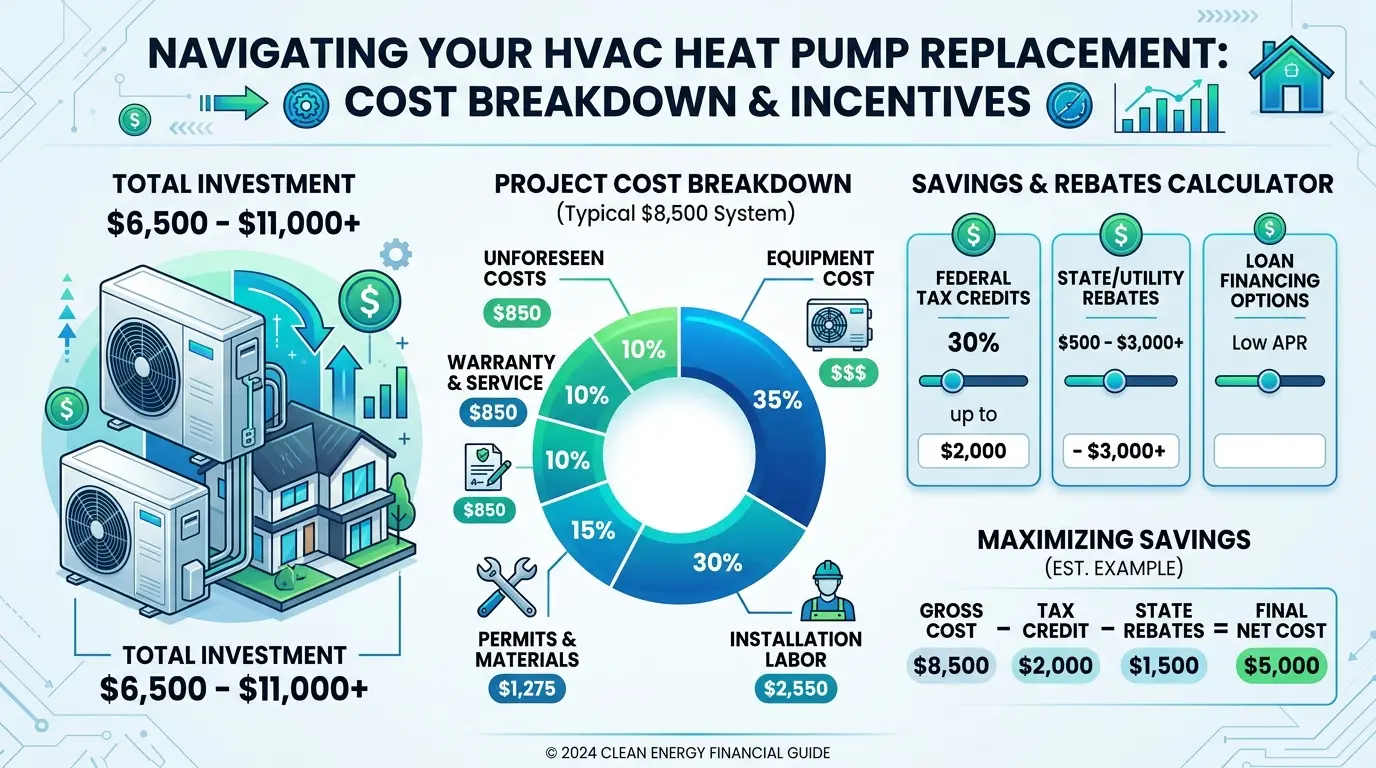
When discussing the financial impact of a new HVAC system, you must account for the available federal tax credits and local utility rebates that offset the initial purchase price. The IRS.gov website outlines specific tax credits available under the Energy Efficient Home Improvement Credit program. Homeowners who install qualifying air source heat pumps or high-efficiency central air conditioners can claim a substantial percentage of the project cost on their annual tax returns.
These incentives lower the net cost of the installation, thereby improving your overall return on investment when you sell the property. For example, if a high-efficiency heat pump costs $10,000 to install, a federal tax credit of $2,000 reduces your actual out-of-pocket expense to $8,000. If that same system adds $6,000 to your home value, your effective financial recovery is significantly higher than if you had paid the full retail price. Additionally, local utility companies frequently offer cash rebates for upgrading from outdated equipment to ENERGY STAR certified models, further decreasing the financial burden.
Strategic Upgrades and Regional Market Demands
The degree to which a new HVAC system increases home value also depends heavily on your geographic location. In regions experiencing extreme summer temperatures, such as the Sun Belt, a robust and highly efficient central air conditioning system is not considered a luxury but an absolute necessity. Buyers in these markets will penalize homes that feature old, struggling AC units. In contrast, homes in colder northern climates see a larger value increase from the installation of high-efficiency gas furnaces or advanced cold-climate heat pumps.
Understanding your local market demands ensures that you invest in the right type of equipment. Consult with local real estate professionals to determine which HVAC features are currently commanding premium prices in your neighborhood. Sometimes, adding a secondary feature like a whole-home humidifier or an advanced air purification system can provide the extra appeal needed to secure a top-dollar offer from health-conscious buyers.
Indoor Air Quality and Modern Buyer Preferences
Beyond simple temperature control, contemporary homebuyers are placing an unprecedented emphasis on indoor air quality. According to the EPA, indoor air can frequently be more polluted than outdoor air, a fact that has not gone unnoticed by health-conscious consumers. When you upgrade to a new HVAC system, you have the opportunity to integrate advanced air filtration technology, such as high-efficiency particulate air filters and ultraviolet germicidal irradiation lights. These additions actively neutralize airborne pathogens, reduce dust buildup, and alleviate allergy symptoms for the occupants.
Marketing a home with a brand new, technically advanced HVAC system that specifically addresses indoor air quality provides a powerful narrative for your real estate listing. You are no longer just selling a functional appliance; you are selling a healthier, more comfortable living environment. Families with young children or individuals with respiratory sensitivities are particularly drawn to properties that offer superior air purification capabilities. By highlighting these specific health benefits alongside the energy savings and mechanical reliability, you can significantly elevate the perceived value of your property and justify a higher final sale price.
Evaluating the Overall Financial Strategy
Deciding whether to replace your HVAC system before listing your home requires a holistic view of the property condition. If the roof is leaking and the kitchen is severely outdated, a new furnace will not miraculously salvage the sale price. However, if the house is otherwise well-maintained and aesthetically pleasing, an aging HVAC system stands out as a glaring liability. By addressing this mechanical vulnerability, you present a cohesive, move-in-ready package to prospective buyers.
Furthermore, a new system prevents deal-breaking scenarios during the final stages of the sale. Many buyers rely on strict financing options like FHA or VA loans, which require the home to meet specific habitability standards. A non-functioning or unsafe heating system can cause the lender to deny the loan outright. Replacing the equipment preemptively guarantees that the home will pass these stringent lender appraisals, ensuring that your buyer can successfully secure their mortgage and close the deal on schedule.
Final Considerations for Home Sellers
Investing in a new heating and cooling system is a significant financial commitment, but the evidence strongly suggests that it is a sound strategy for increasing property value and expediting the sale process. By carefully selecting equipment that aligns with local market expectations and maximizing available tax credits and rebates, homeowners can effectively mitigate the upfront costs. The result is a highly marketable property that attracts confident buyers willing to pay a premium for long-term comfort and reduced maintenance obligations.
Always ensure that your installation is performed by a licensed, reputable contractor who adheres to the guidelines established by ACCA (Air Conditioning Contractors of America). Proper installation is just as critical as the quality of the equipment itself. A poorly installed system will fail to deliver the promised energy savings and may void the manufacturer warranty, entirely negating the value you intended to add to your home. Provide all installation records, warranty documents, and maintenance logs to the buyer at closing to solidify their confidence in the purchase and finalize the transaction smoothly.
Try Our System ROI Calculator
Calculate resale equity gains vs installation expense.
Open System ROI Calculator →